

Standards of Review Take Center Stage in Trademark Case Accepted by SCOTUS
On June 29, the Supreme Court of the United States agreed to decide whether the strength of a trademark—a key factor in determining likelihood of consumer confusion—is a question of law or fact. The answer will affect the role of district courts in ruling on trademark issues and the role of appellate courts in reviewing those decisions. The Supreme Court’s decision could also affect the evidentiary and procedural strategies employed by future trademark litigants.
The question before the Supreme Court arises out of RiseandShine Corp. v. PepsiCo, Inc., in which RiseandShine Corporation, doing business as Rise Brewing Co. (“Rise”)—the producer of single-serve, canned coffee beverages—sued PepsiCo., Inc. under a trademark infringement theory for using its “MTN DEW RISE ENERGY” mark on its now-discontinued line of energy drinks.
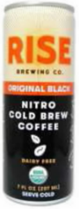
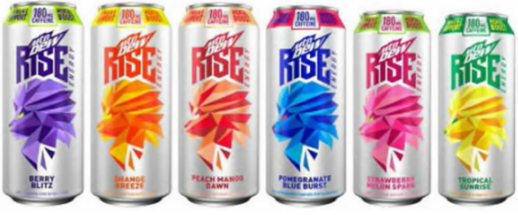
As in all trademark infringement cases, the issue was whether using similar marks was likely to confuse consumers. While circuit courts use different tests to analyze consumer confusion, those tests are vastly similar, and each examines the “strength” of a plaintiff’s mark.
The “strength of the mark” factor has two prongs:
- Conceptual or inherent strength/distinctiveness: This asks how distinctive a mark is on its face and, therefore, how much legal protection it should receive. Courts classify marks as generic, descriptive, suggestive, or arbitrary/fanciful. This classification is a spectrum; “generic” marks are weak and receive no trademark protection, while “arbitrary” or “fanciful” marks are strong and receive broad protection.
- Acquired or commercial strength/distinctiveness: This asks how well the public recognizes the mark in the marketplace.

In November 2021, the Southern District of New York found that Rise was entitled to a preliminary injunction against Pepsi’s use of “MTN DEW RISE ENERGY.” On appeal, the Second Circuit reviewed the inherent strength analysis de novo (“from the beginning”), giving no deference to the lower court. The Second Circuit reversed, holding that the district court’s inherent strength analysis was a “legal error.”
According to the Second Circuit, although the district court properly classified Rise’s mark as “suggestive,” it failed to consider the strong logical associations created by the word “RISE” , including waking up, “rising” from bed, craving a cup of coffee in the morning, and “rising” energy levels after consuming caffeine.
With respect to the acquired strength analysis, the Second Circuit held the district court’s findings “clearly erroneous”—language that implies the issue is a factual question and generally requires an appellate court to defer to the lower court unless it is firmly convinced that a mistake was made. In other words, despite Rise’s significant expenditures on publicity, the Second Circuit found that the evidence of acquired strength was insufficient to overcome its conclusion that the mark was inherently weak.
When the Second Circuit disagreed with the lower court’s examination of the “strength of the mark” analysis and vacated its decision, the Southern District of New York became effectively bound by the Second Circuit’s legal holding under the “law of the case.” When Pepsi later sought summary judgment to dismiss Rise’s trademark infringement claim, the Southern District of New York had no choice but to follow the Second Circuit’s finding that Rise’s mark was “inherently weak,” and granted Pepsi summary judgment of no trademark infringement. On a second appeal, the Second Circuit affirmed, reiterating its previous holding and rationale on a nearly identical record.
Unhappy with this result, Rise seeks clarity from the Supreme Court on the issue of whether the strength of a trademark is a question of fact or law. The crux of Rise’s petition rests on the existence of a “circuit split,” where twelve of the thirteen circuit courts—with the Second Circuit as the lone outlier—treat the question of whether a mark is “conceptually” or “inherently” strong as a question of fact.
In its next term, the Supreme Court will decide whether conceptual or inherent strength is a legal determination to be decided by a court, or a factual determination to be decided by a jury of ordinary consumers as part of the broader “likelihood of consumer confusion” analysis. Either way, the Supreme Court’s ruling could impact future trademark litigation.
For example, if the Supreme Court agrees with the Second Circuit and finds that “inherent strength” is a legal question, it may have the following impact:
- More trademark infringement defendants may seek to transfer cases to districts within the Second Circuit in hopes of early resolution and reducing litigation expenses by seeking early dismissal or summary judgment on the legal question of “inherent strength.”
- Courts of other circuits may begin resolving the issue of “inherent strength” as a legal question.
- Extrinsic evidence of inherent strength will become more important than ever, including whether a particular field is crowded with similar marks (i.e., third-party uses), remarks made during trademark prosecution, and, for suggestive marks, the similarity or dissimilarity of allusion that other sources using the mark apply to their products.
- The weight accorded to acquired strength may play a more significant role in the totality of strength analysis to avoid summary judgment.
On the other hand, if the Supreme Court holds that “inherent strength” is either a factual or mixed (factual and legal) question, it may have the following impact:
- Litigants may look towards other factors in the “likelihood of confusion” analysis for which no factual dispute exists to bolster their chances of summary judgment.
- District courts of the Second Circuit may see fewer trademark cases resolved on summary judgment if the “strength of the mark” factor remains one of the most important in the consumer confusion analysis.
- The Second Circuit will review summary judgment orders relating to the “strength of the mark factor” with greater deference to the lower court’s findings, given the standard of review it must recognize and apply.
We will continue to observe this dispute before the Supreme Court. If you have any questions regarding trademark protection, please contact your regular Armstrong Teasdale attorney or a member of the firm’s Trademark or Intellectual Property Litigation practices.